Contact us
Contact us
Our WorkOur Products
About UsOur Process
NewsroomContact Us

Our studio

  • Collingwood
    3/30-34 Oxford Street,
    Collingwood, Victoria 3066

Follow us

Work
  • Our work
  • Our products
  • Our process
  • Newsroom
Company
  • About
  • Process
  • Website support
  • Contact us
Connect
  • Facebook
  • LinkedIn
  • YouTube
Newsletter

Subscribe for marketing insights, campaign ideas and the latest from the ADME team.

© 2026 ADME. All rights reserved.PrivacyTermsEditorial standards
← Newsroom/EVs & hybrids

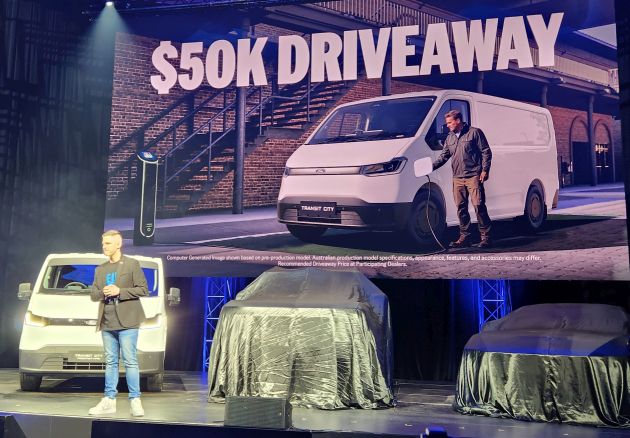
Ford prices new fully electric van at $50,000 driveaway – and an overwhelming total cost advantage over ICE

Compiled by ADME Newsroom from 3 sources

First reported by The Driven · 9 September at 6:01 am
Who's covering this — 3 articles

EV specialists
2
Motoring press
1
Share

Image: The Driven

The quick read

Full coverage

The Driven·EV specialists·9 September at 6:01 am

Ford prices new fully electric van at $50,000 driveaway – and an overwhelming total cost advantage over ICE

Ford prices its new electric van at $50,000 driveaway, adding to the increasingly competitive market for vans that are easily beating ICE competitors on total costs. The post Ford prices new fully…

Read at The Driven →
CarExpert·Motoring press·9 September at 6:00 am

2026 Ford Transit City EV priced at $50,000 drive-away

Aggressive pricing puts Ford Australia on the front foot as it adds a new entry-level electric van to its Transit lineup.

Read at CarExpert →
EV Central·EV specialists·9 September at 6:00 am

A BEV at an ICE price: Ford Transit City electric van lands in Australia from $50,000 drive-away to take on the Toyota HiAce

Ford has turned to China to build a $50,000 electric van it hopes will tackle the Toyota HiAce and Hyundai Staria Load.

Read at EV Central →

More from the newsroom

CarExpert

2027 Volkswagen ID. Polo review: Quick drive

VACC (Newsroom)

World EV Day belongs to the industry, not just the technology

The Driven

Dealerships, mechanics and repair shops offered rebates for EV chargers and electric vehicle tools

CarsGuide

XPeng X9 2026 review Australia: New Chinese EV people mover targets popular Kia Carnival Hybrid

Chasing Cars

Polestar Formula 2030: next Polestar 2 previewed as suave Volvo subsidiary evolves its design

7NEWS

New Mitsubishi Pajero to offer hybrid and plug-in hybrid power

The ADME Newsroom is a news aggregator. Headlines, excerpts and article images remain the property of their original publishers, are shown for the purpose of reporting news, and always link to and credit the original reporting. Items marked “file image” use manufacturer-supplied press imagery of the vehicle referenced; vehicle and brand names are trademarks of their respective owners.

Quick-read summaries and “ADME commentary” are our own, are clearly marked, and are general industry commentary — not financial, legal or purchasing advice. Summaries and commentary may be AI-assisted and can contain errors — always check the original reporting before relying on specifics. Publishers and manufacturers: for corrections, attribution changes or removal, contact advertising@adme.net.au and we'll action it promptly. Read our editorial standards.

Ready to stand out?Tell us about it.

Whether it’s a brand, a campaign or a product that needs to stand out, we’d love to hear about it.

Tell us about your project →
Our studio
  • Collingwood
    3/30-34 Oxford Street,
    Collingwood, Victoria 3066
Call(03) 9417 7107
Emailadvertising@adme.net.au

The quick read

  • Ford's new electric van is priced at $50,000 driveaway, competing directly with the Toyota HiAce.
  • The new van is built in China and adds to the increasingly competitive market for electric vans.
  • The Ford electric van has a total cost advantage over ICE competitors, making it an attractive option for customers.
  • The aggressive pricing of the Ford electric van will put pressure on other manufacturers to follow suit.

For dealers: The arrival of the Ford electric van will increase competition in the van market and require dealers to be more transparent and effective in their pricing and sales strategies.

AI-assisted summary of the coverage below — check the original reporting before relying on specifics.

ADME commentary

The ADME angle

The $50,000 driveaway price of Ford's new electric van is a direct challenge to the dominance of the Toyota HiAce in the Australian van market, and dealers should expect a significant increase in showroom traffic from customers comparing the two models.

The Transit lineup's new entry-level electric van will likely cannibalize sales from the higher-end models, but the overall increase in sales volume will more than make up for the potential loss in margin per unit.

What it means for the order bank

Dealers who are prepared to stock the new electric van will be able to take advantage of the total cost advantage it offers over ICE competitors, and should prioritize ordering stock to meet the expected demand.

The Hyundai Staria Load is also a competitor in this space, but its higher price point makes it less of a threat to the Ford electric van, and dealers should focus on comparing the Ford model to the Toyota HiAce in their marketing efforts.

Pricing and margin

The aggressive pricing of the Ford electric van will put pressure on other manufacturers to follow suit, and dealers should be prepared to negotiate with customers who are comparing prices across different models and brands.

Dealers who can effectively communicate the total cost advantage of the Ford electric van will be able to maintain their margin and still make sales, but it will require a high level of transparency and trust with their customers.

Taking action

This week, dealers should review their inventory and ordering processes to ensure they are prepared to meet the expected demand for the new Ford electric van, and should start training their sales staff on how to effectively compare the model to its competitors.

Go deeper — ADME analysis

  • VFACTS May 2026: a Tesla outsells every ute, and the market keeps shifting →
  • NVES and the FBT change: the two policies quietly reshaping what Australia buys →